The Coffee Flavor Wheel
Why beans taste like fruit, chocolate, or nuts has nothing to do with “added flavors.” It’s genetics + where the coffee grew + how it was processed + how it was roasted. This guide breaks it down—no snobbery.
Key takeaways
- Flavor is real. Coffee contains hundreds of aromatic compounds. “Blueberry” is a shorthand for what those compounds resemble.
- Origin matters. Altitude, climate, and variety shape acids, sugars, and aromatics—before roasting even happens.
- Process changes everything. Washed is cleaner, natural is fruitier, honey often lands in the sweet middle.
- Roast is a slider. Lighter roasts preserve origin character; darker roasts push toasted, smoky, bitter notes.
How to read tasting notes (without rolling your eyes)
Tasting notes aren’t ingredients. They’re comparisons. If a coffee smells like strawberries, it’s not because strawberries were added— it’s because the bean’s chemistry (built by plant genetics and farm conditions) produces aromatic compounds that remind us of strawberry.
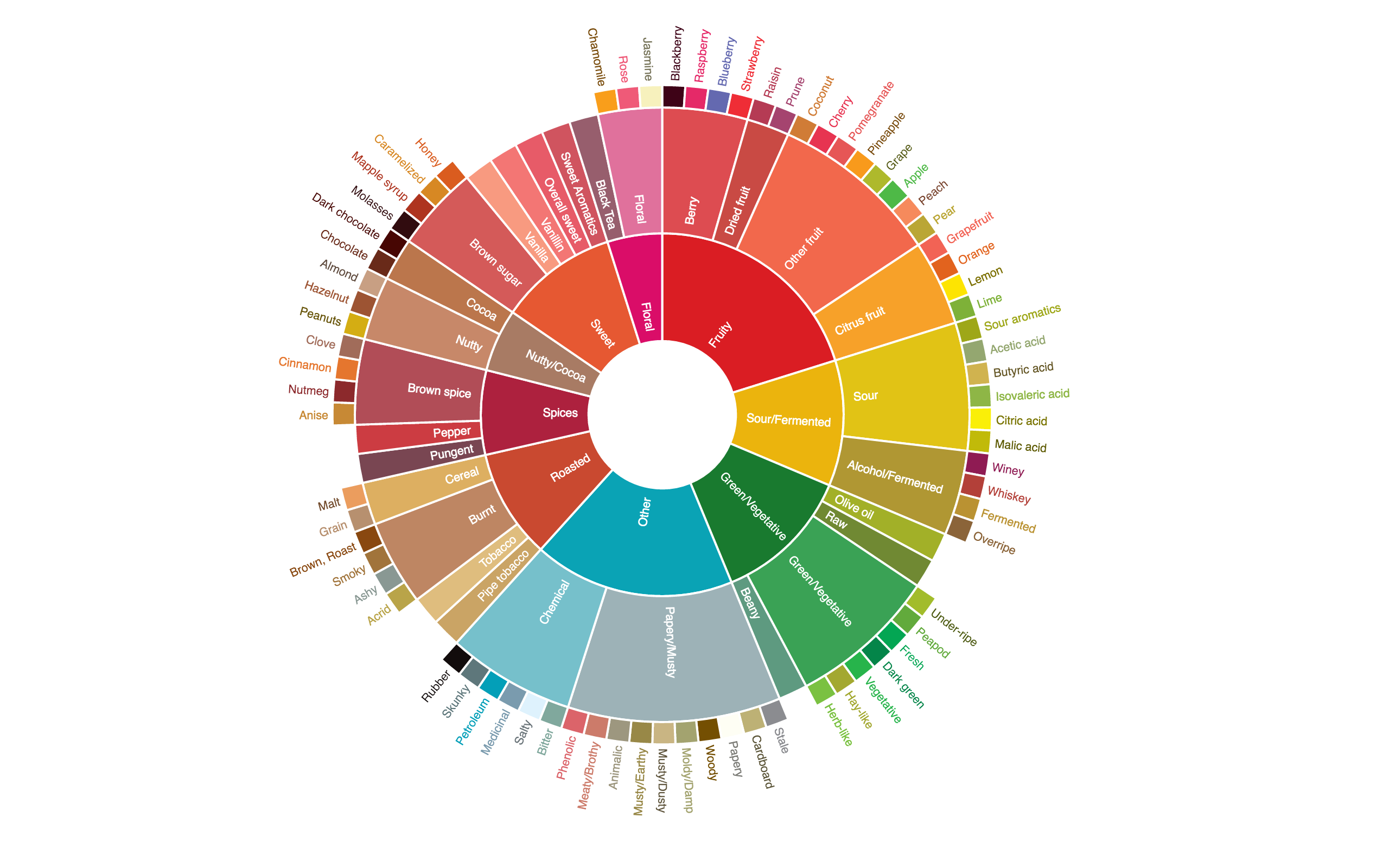
The coffee flavor wheel is a shared language for those comparisons. Start in the center (big categories), then move outward (specific notes). Your goal isn’t to “perform” — it’s to find coffees you like and brew them better.
Interactive coffee flavor wheel
Use the wheel to get specific. Pick a category below (or search for a note) and you’ll get a plain-English description, what usually causes it, common origins, and how to highlight (or reduce) it in the brew.
Flavor Explorer
Origin & terroir: why beans taste different
“Terroir” is a fancy word for a simple idea: where something grows changes what it becomes. In coffee, origin influences sweetness, acidity, body, and aroma—before any roast profile gets involved.
East Africa: bright, floral, fruit-forward
Ethiopia and Kenya are famous for coffees that read like fruit and flowers—think citrus, berries, tea-like florals. High elevations and certain varieties tend to amplify aromatic complexity.
The Americas: balanced, sweet, approachable
Colombia, Guatemala, Costa Rica, and Brazil often land in caramel/chocolate/nut territory with a clean structure. That’s why these origins are common “daily driver” coffees.
Asia-Pacific: earthy, spicy, savory
Some Indonesian coffees lean toward cedar, tobacco, spice, and earthy notes. Processing methods can push these profiles even further.
Altitude: the slow-growth advantage
Higher altitudes usually mean cooler nights and slower cherry development. Slower growth can mean denser beans and more opportunity for sugars and acids to develop—often showing up as brighter, more complex cups.
Processing: washed vs natural vs honey
Processing is how the fruit is removed from the seed. Same farm, same variety, different process—completely different flavor.
- Washed: cleaner, clearer, often brighter. Great for floral/citrus clarity.
- Natural: fruitier, sometimes winey, heavier body. Great for big berry notes.
- Honey: a sweet middle ground. Often syrupy, candy-like, jammy.
Roasting: origin character vs roast character
Roast rule of thumb
As roast gets darker, origin flavors (fruit/floral/acid) usually fade and roast flavors (toast/smoke/bitterness) take over. Light roast tastes like a place. Dark roast tastes like the roast.
Affiliate disclosure: Brew Any Coffee participates in affiliate programs. If you buy through our links, we may earn a commission at no extra cost to you. It helps keep the guides free and the coffee education non-snobby.